
What we are watching is something different: A fog manufactured and maintained by the people who started the war, so that the question of why it was started never has to be answered, observes Prem Panicker in his must read blog on the war in the Middle East.

The Supreme Court granted bail to Arvind Dham in a money laundering case, emphasizing that prolonged incarceration without trial violates the right to a speedy trial under Article 21 of the Constitution.

''Women are coming into public spaces in larger numbers than ever before. They are educated, capable, opinionated, and determined.' 'But the more women push for access to public space, the harder they are pushed back -- through attacks like this, through discrimination, through the glass ceiling, through the deliberate denial of recognition.'

The fact that a major studio put out a silent film starring some of the biggest names in the industry in these concerning times for the film business is the one big takeaway from Gandhi Talks, notes Arjun Menon.
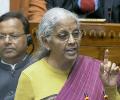
The 2026-27 Budget, seeking to harmonise the government's imperative to grant certainty while ensuring a rational tax policy, had several notable announcements to usher in halcyon days, says Mukesh Butani.

The Unnao rape case survivor expressed satisfaction after the Supreme Court stayed the Delhi High Court order suspending Kuldeep Sengar's life sentence. She voiced her faith in the justice system.

The new UGC regulations mandating all higher education institutions to form "equity committees" to look into discrimination complaints and promote equity were notified on January 13.

This was up 30 per cent from the same period last year, even as the number of frauds fell 2.8 times to 5,092.
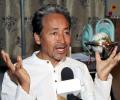
Climate activist Sonam Wangchuk, detained under the National Security Act, denied allegations in the Supreme Court that he incited sedition. His lawyer argued that the police selectively used video evidence to mislead authorities.
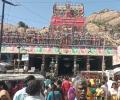
The Madras high court's Madurai division bench on Tuesday upheld a single judge's order allowing lighting of a lamp on what is claimed as 'deepathoon' on the Thirupparankundram hill in Tamil Nadu.
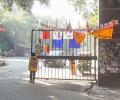
Jawaharlal Nehru University (JNU) has sought a first information report (FIR) after students allegedly raised 'provocative' slogans against Prime Minister Narendra Modi and Union home minister Amit Shah inside the university campus during an event on Monday night, varsity officials said.

A bench of Justices Vikram Nath and Sandeep Mehta termed the exorbitant rise of airfares by airlines as "exploitation" and asked the Centre and the Directorate General of Civil Aviation (DGCA) to file their replies to a PIL seeking binding regulatory guidelines to control the unpredictable fluctuations in airfare and ancillary charges imposed by private airlines in India.

'Grassroots-level corruption, which disrupts the last-mile work, cannot be ignored in your enthusiasm and drive to get going to complete the project.' 'Like it was in MGNREGA, in some states, it is the case with the Jal Jeevan mission.' 'The last minute levels of corruption can ruin the intent of the project itself.' 'When you see that people can game a particular well-intended and well-crafted project, you need to correct that.'

The Supreme Court has reserved its judgment on a plea seeking passive euthanasia for a man who has been in a comatose state for over 12 years after suffering a fall in 2013. The court heard arguments regarding the withdrawal of artificial life support and the ethical considerations involved.
The Supreme Court of India has ruled that an 'act of terror' under the Unlawful Activities (Prevention) Act (UAPA) includes planning, coordination, and mobilization, not just the final execution of the act. The court emphasized that the intent and effect of the act are crucial, not solely the instrumentality used.

AIFF asks clubs to confirm participation in delayed ISL

A petition has been filed in the Supreme Court challenging the Delhi High Court's decision to suspend the jail sentence of expelled BJP leader Kuldeep Singh Sengar in the 2017 Unnao rape case.
The Election Commission (EC) defended its power to revise electoral rolls and ensure no foreigners are registered as voters before the Supreme Court. The EC argued it has a constitutional duty to maintain the purity of electoral rolls and exclude those not eligible to vote.

Staring at a permanent paralysis: Indian footballers urge FIFA intervention on ISL
'Once the actual scope is understood, it becomes evident that the framework is about internal redress and course correction, and in no way criminalisation.'

'The natural barrier that is Aravalli, you are demolishing it, then who will stop the desert?' 'In future, I predict that people will roam around with oxygen cylinders in Delhi because they won't be able to breathe.'

The Supreme Court has questioned the NIA regarding the detention of Kashmiri separatist leader Shabir Ahmed Shah in a terror funding case, asking the agency to justify his detention for over six years.

Experts warn that a new government definition of the Aravali Hills, accepted by the Supreme Court, could lead to environmental degradation and expose Delhi and surrounding regions to harsher weather and drought conditions.

A Delhi court rejected the transit anticipatory bail pleas of Saurabh and Gaurav Luthra, owners of Birch by Romeo Lane nightclub in Goa, where a fire killed 25 people. The court cited their evasion of legal processes as a reason for the denial.

'What has changed is that the new regulations are backed by a clear enforcement framework. They have real consequences and, for the first time, make compliance unavoidable.'
'The implementation of the judgment has largely been left to the discretion of the very executive authorities it sought to restrain.'

The TMC and BJP have engaged in a blame game following a chaotic Lionel Messi event at the Salt Lake Stadium in Kolkata, which saw spectators storming the field and the main organiser being arrested for alleged mismanagement.

As he is laid to rest, Indian cricket bids farewell to one of its greatest administrators -- a visionary who understood that breaking monopolies and building stadiums were about the same thing: Giving millions of cricket-loving Indians the infrastructure worthy of their passion.

The Supreme Court on Thursday refused to accept the preliminary objections raised by opposition-ruled states like Tamil Nadu, West Bengal and Kerala to maintainability of Presidential Reference, saying the issues raised in it pertain to the very core and foundational modalities of the constitutional machinery.
The Supreme Court has sought a response from the CBI on a former RAW official's plea seeking documents related to his trial under the Official Secrets Act. The case involves allegations of revealing secret information in a book written by the official.
'Even as the Supreme Court's anti-punitive demolition judgment nears its first anniversary, no formal contempt proceedings have been initiated either by the Supreme Court or any high court against officers or demolition squads who have acted in violation of it.'

Surendra Koli, accused in the infamous Nithari serial killings, has been released from the Luksar district jail in Greater Noida, a day after the Supreme Court acquitted him in the last pending case linked to the 2006 serial murders that had shocked the nation, officials said on Thursday.

'Caring for one's parents is the husband's responsibility, especially if he is the earning member of the family.' 'The wife may be financially dependent on him but that does not create a legal obligation for her to serve or care for her in-laws.'
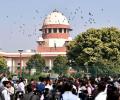
The Supreme Court of India has ruled that no timelines can be imposed on governors and the president to grant assent to bills passed by state assemblies, clarifying the extent of their powers under Article 200 of the Constitution.

iPhone maker tells Delhi HC the antitrust watchdog has no jurisdiction to consider its global turnover.
The Supreme Court on Friday asked the Law Commission to consider a plea as a representation of a Buddhist group that certain sets of personal Hindu laws, which are applicable to Buddhists also, are against their fundamental rights, including freedom to practice religion.

InterGlobe Aviation, the operator of IndiGo, has approached the Delhi high court seeking a refund of over Rs 900 crore it claims to have paid as Customs duty on aircraft engines and parts re-imported into India after overseas repairs. The petition came up for hearing on Friday before a bench of Justices Prathiba M Singh and Shail Jain.
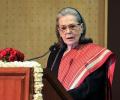
Union Minister Gajendra Singh Shekhawat has requested Sonia Gandhi to return Jawaharlal Nehru's documents to the Prime Ministers' Museum and Library, emphasizing their national significance. He also addressed the Aravalli Hills controversy and the Viksit Bharat-Guarantee for Rozgar and Ajeevika Mission.

The Delhi High Court dismissed appeals by the sons of Hizbul Mujahideen chief Syed Salahuddin and others, challenging the framing of charges against them in terror funding cases, citing the interlocutory nature of the order.

Current situation risks rendering ongoing operations untenable: ISL clubs to AIFF
